Disclosure: Some links on this page are affiliate links. If you buy through them, we may earn a commission at no extra cost to you. Read our Affiliate Disclosure.
A dog that drags you down the street can turn a pleasant walk into a battle. Pulling is very common, and it is usually something dogs learn because it works: pulling gets them where they want to go. The fix is to teach your dog that a loose lead is what moves you both forward.
Why dogs pull
- They are excited and walk faster than we do.
- Pulling has been rewarded, because they reach the smell, dog or park they wanted.
- They have never been taught what to do instead.
Step by step
1. Get the right equipment
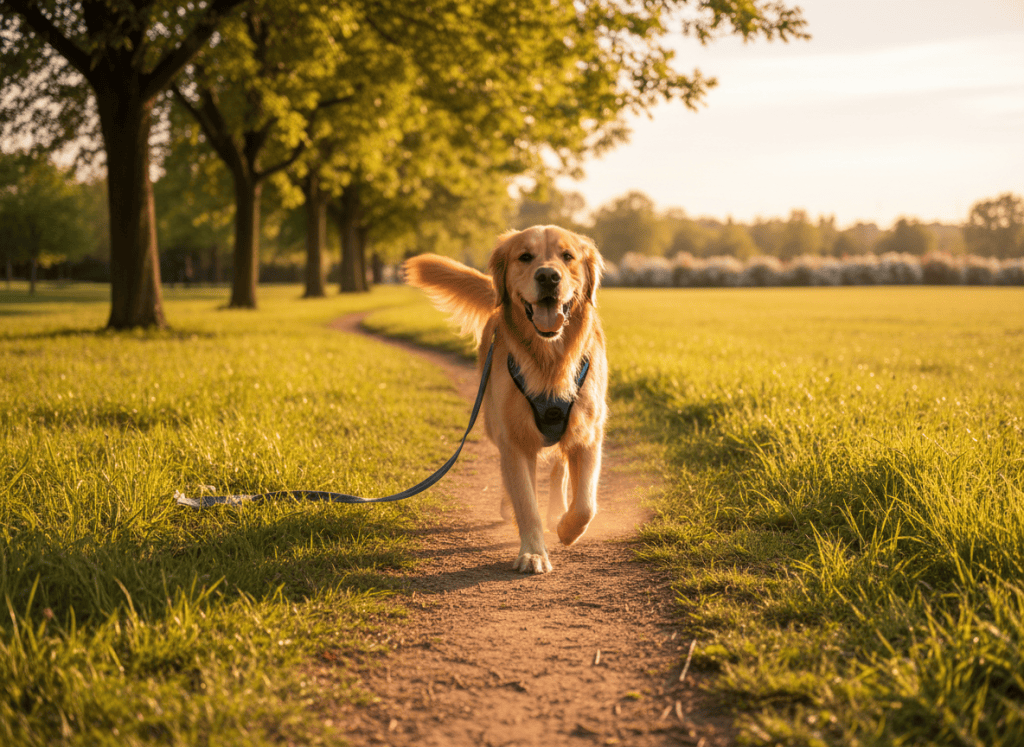
A well-fitting harness is a comfortable choice for many dogs and spares the neck. Use a normal-length lead rather than a long or retractable one while you teach this. A trainer can advise on the best gear for your dog.
2. Start somewhere quiet
Practise in the garden or a quiet street, not at the busy park. Bring small, tasty treats.
3. Reward the dog for walking next to you
Whenever the lead is loose and your dog is beside you, give a treat and praise. Keep treats at your side so your dog learns that this is where the good things happen.
4. Stop when the lead goes tight
The moment the lead tightens, stop walking and stand still calmly, without yanking. When your dog looks back at you or the lead slackens, reward and walk on. Your dog learns that pulling stops the walk and a loose lead keeps it going.
5. Build up slowly
Add distractions gradually and keep sessions short and positive. Expect progress over weeks, not days. Every time your dog gets to pull and reach something, it undoes a little of your training, so patience and consistency matter most.
If you want more help
If you would like a structured guide covering obedience in general, one option is Secrets to Dog Training, which the seller describes as an obedience program (affiliate link). We have not tested it. A local class with a qualified trainer is another good option, particularly if your dog is large and strong or reactive to other dogs.
This article is general information and is not a substitute for advice from your veterinarian or a qualified trainer.


Leave a Reply